

Screen Time and Brain Development: What the Latest Research Says (And What Parents Can Do)
Learn what research says about screen time and children's brain development, including MRI studies, AAP recommendations, and practical strategies from child psychologist Dr. Cari Alvarez.
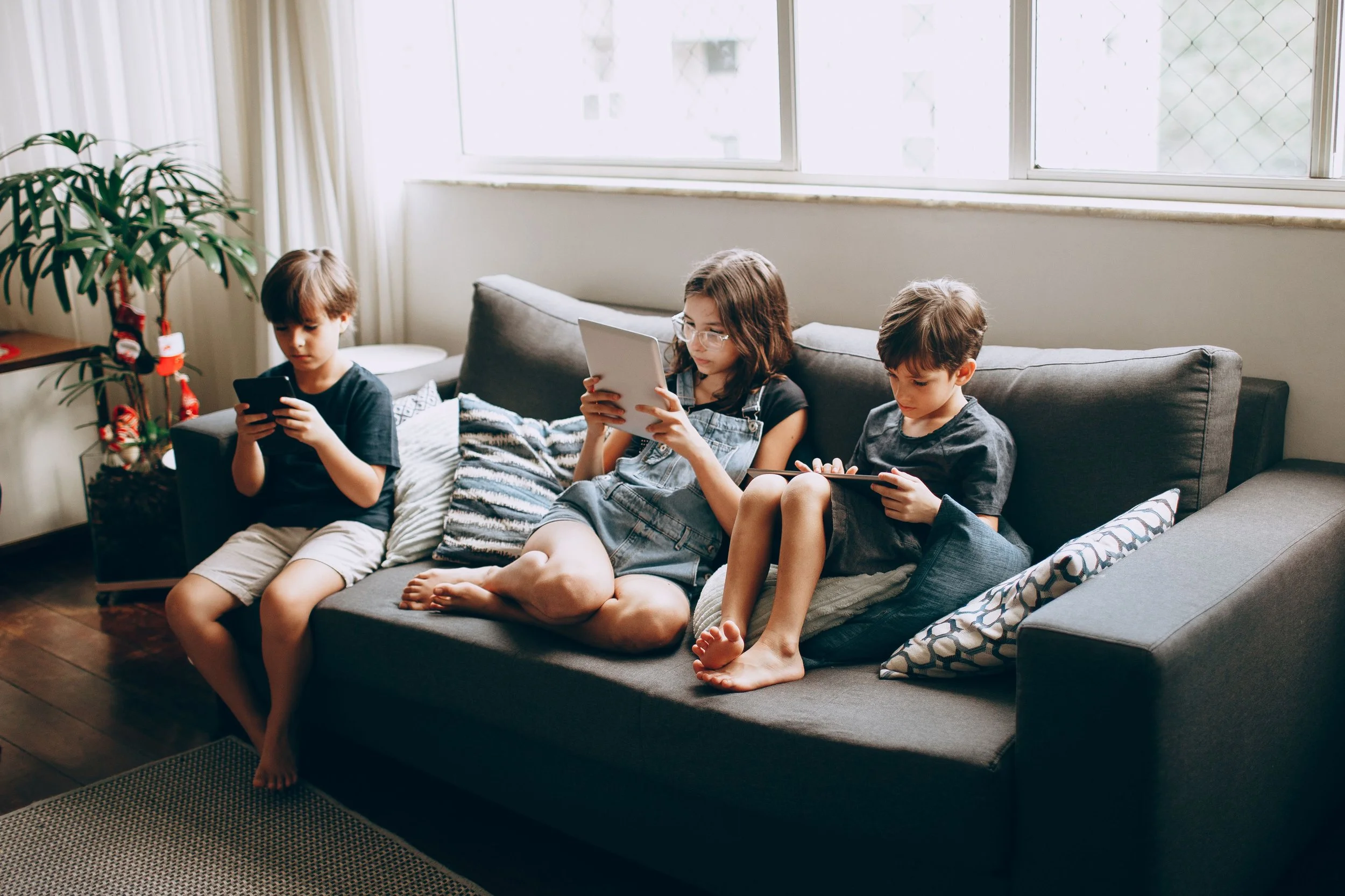
Screen Time and Brain Development: What Every Parent Should Know
Quick Answer: Does Screen Time Affect Brain Development?
Yes—but it's more complicated than most headlines suggest.
Research has found that higher levels of screen use during early childhood are associated with differences in brain development related to language, attention, executive functioning, and emotional regulation.
However, current studies do not prove that screen time causes these brain differences.
What matters most is:
The quality of the content
Whether an adult is watching with the child
Whether screens replace sleep, outdoor play, reading, or family interaction
The child's overall developmental environment
What Did the Brain MRI Study Actually Find?
One of the most widely discussed studies on screen time was published in JAMA Pediatrics in 2020 by researchers at Cincinnati Children's Hospital.
Researchers performed MRI scans on 47 preschool-aged children and found that greater screen use was associated with less organized white matter.
What is White Matter?
White matter is often described as the brain's communication network.
It connects different brain regions so they can work together efficiently. These pathways support:
Language
Reading
Attention
Memory
Executive functioning
Emotional regulation
Children whose parents reported more screen use showed differences in these communication pathways.
What This Study Does NOT Mean
It's important to interpret these findings carefully.
This study:
✓ Found an association
It did not:
✗ Prove that screens caused the brain differences
✗ Show permanent brain damage
✗ Demonstrate that occasional screen use is harmful
Instead, it suggests that early childhood experiences—including media use—may influence how developing brains are organized.
Does Screen Time Cause ADHD?
No.
There is no evidence that screen time causes ADHD.
However, excessive screen use may make ADHD symptoms more noticeable by affecting:
Sleep
Emotional regulation
Attention
Impulse control
Children with ADHD also tend to seek highly stimulating activities, including screens, so researchers believe the relationship goes in both directions.
If your child struggles with attention across home, school, and social settings—not just during screen time—a comprehensive evaluation may be appropriate.
Does Screen Time Cause Autism?
No.
Research clearly shows that screen time does not cause autism.
Autism is a neurodevelopmental condition with strong genetic and biological influences.
However, if screen use replaces opportunities for conversation, pretend play, joint attention, and social interaction, children may have fewer chances to practice the social and language skills that naturally develop during early childhood.
For children who already have developmental differences, protecting these everyday learning opportunities becomes even more important.
The Good News: Research Also Shows What Helps
Fortunately, the research doesn't stop with identifying risks.
Scientists have also discovered several everyday activities that appear to support healthy brain development.
1. Read Together Every Day
One of the most exciting studies published in 2024 found that shared reading may actually buffer some of the brain differences associated with screen time.
Researchers found that children whose families read together more often showed healthier social-emotional brain networks—even when overall screen time was similar.
Reading together supports:
Language development
Emotional understanding
Executive functioning
Parent-child attachment
Attention skills
Just 15–20 minutes of shared reading each day can have meaningful developmental benefits.
2. Watch Together Instead of Separately
Not all screen time is equal.
Passive, solitary viewing is consistently associated with poorer developmental outcomes than watching together.
When you co-view media, try:
Asking questions
Naming emotions
Predicting what will happen next
Connecting the story to your child's life
Conversation transforms screen time into a language-learning opportunity.
3. Choose High-Quality Content
Educational programming tends to produce better developmental outcomes than fast-paced entertainment.
Examples include:
PBS KIDS
Sesame Street
Daniel Tiger's Neighborhood
Even the best educational programming, however, should complement—not replace—real-life play, conversation, and exploration.
4. Spend Time Outdoors
Outdoor play is one of the most powerful ways to support healthy development.
A 2023 study found that children who played outside almost every day showed fewer developmental concerns associated with higher screen use.
Outdoor play strengthens:
Attention
Problem-solving
Motor skills
Emotional regulation
Creativity
Social skills
Rather than focusing only on reducing screen time, focus on increasing everything else.
What Does the American Academy of Pediatrics Recommend?
Current guidance emphasizes quality over strict time limits, but suggestions say the following:
Under 18 Months
Avoid screens except for video chatting.
18–24 Months
Choose high-quality educational programming and watch together.
Preschoolers (Ages 2–5)
Focus on:
High-quality content
Watching together whenever possible
Ensuring screens don't replace sleep, outdoor play, reading, or family interaction
School-Age Children
Create healthy family media habits while encouraging critical thinking and media literacy.
10 Evidence-Based Ways to Build Healthy Screen Habits
Instead of aiming for perfection, focus on balance.
✔ Read together every day
✔ Play outside daily
✔ Eat meals without screens
✔ Keep devices out of bedrooms
✔ Avoid screens before bedtime
✔ Watch together whenever possible
✔ Encourage imaginative play
✔ Choose slower-paced educational programming
✔ Model healthy screen habits yourself
✔ Make time every day for conversation and connection
Signs Screen Time May Be Interfering With Development
Consider speaking with a pediatrician or child psychologist if your child:
Has frequent meltdowns when screens are removed
Shows delayed language development
Prefers screens over interacting with people
Has difficulty sleeping
Rarely engages in pretend play
Has increasing attention difficulties
Shows declining interest in activities they previously enjoyed
Screens are rarely the entire explanation—but they can become part of a larger developmental picture.
Frequently Asked Questions
Can too much screen time delay speech?
Research suggests that excessive passive screen time may be associated with language delays because children hear fewer words and engage in fewer back-and-forth conversations. Interactive reading, play, and caregiver conversation remain the strongest supports for language development.
Is educational TV okay for toddlers?
High-quality educational programming is generally preferable to passive entertainment, especially when an adult watches alongside the child and talks about what they are seeing.
Are tablets worse than television?
The device itself matters less than how it's used. Passive viewing, endless scrolling, and highly stimulating content tend to be more concerning than interactive educational activities completed with caregiver involvement.
Does screen time affect sleep?
Yes.
Evening screen use—particularly within an hour of bedtime—has been linked to poorer sleep quality, which can affect attention, learning, emotional regulation, and behavior the following day.
What if my child already has ADHD or autism?
Children with ADHD or autism often benefit from individualized screen-time plans. The goal is usually not eliminating screens but ensuring they support rather than replace opportunities for learning, movement, social interaction, and emotional development.
When Should You Seek a Professional Evaluation?
If you're concerned that your child's challenges involve more than typical screen habits, a comprehensive evaluation can help identify the underlying cause.
Children who struggle with attention, language, learning, emotional regulation, or social communication may benefit from an evaluation for:
Autism Spectrum Disorder (ASD)
ADHD
Learning Disabilities
Anxiety
Developmental Delays
A comprehensive evaluation provides clarity, individualized recommendations, and practical next steps for home and school.
About Dr. Cari Alvarez
Dr. Cari Alvarez is a licensed child psychologist and founder of WellBunch Psychology in Orlando, Florida. She specializes in comprehensive evaluations for autism, ADHD, learning differences, and other neurodevelopmental concerns in children and adolescents. Her approach combines evidence-based assessment with practical recommendations that help families better understand and support their child's unique strengths and needs.
References
Hutton JS, Dudley J, Horowitz-Kraus T, et al. Associations Between Screen-Based Media Use and Brain White Matter Integrity in Preschool-Aged Children. JAMA Pediatrics. 2020.
Huang P, Chan SY, Ngoh ZM, et al. Screen Time, Brain Network Development and Socio-Emotional Competence in Childhood: Moderation of Associations by Parent-Child Reading. Psychological Medicine. 2024.
American Academy of Pediatrics. Media and Young Minds and Family Media Plan.
American Psychological Association. Health Advisory on Social Media Use in Adolescence (2023).